
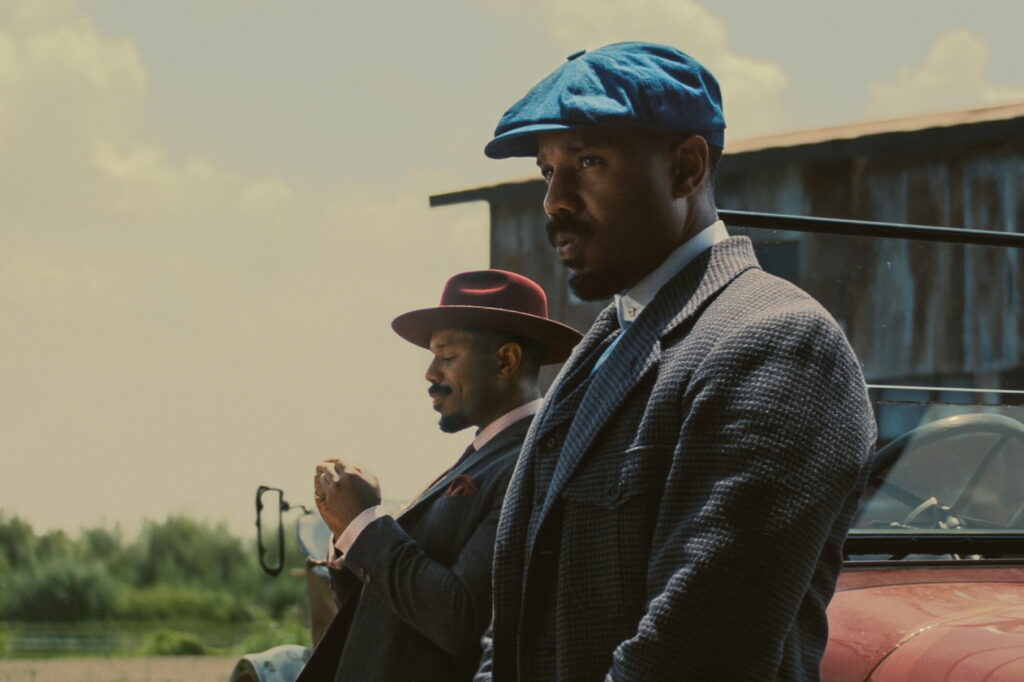
Indigo. The whole thing drowns in indigo, right from the opening frames. The film director Coogler presents Mississippi as if the state's blue essence flows through every part of its body during the first forty minutes of the movie. The camera displays Jordan standing by weathered wood planks while Ruth E. Carter dresses him in a cream vest that glows like a light beam which tries to escape the frame. Works better than it should.
Actually, wait. Let me back up.
The twins thing. Michael B. Jordan plays both Smoke and Stack, gangster brothers returning to 1930s Clarksdale after robbing Chicago mobsters blind. The technology exists already (though not this smooth) but Coogler uses their identical faces to create opposing characters. Smoke emerges in front of us with an organized demeanor which creates a protective shield effect. Stack exudes charisma through all his body movements. Same face, completely different men. Stack reveals his deep fatigue to Mary when he says "Chicago ain't shit but Mississippi with tall buildings instead of plantations." The show provides an unorthodox yet perfectly executed performance.
Carter's costumes reveal all the information about him before anyone starts speaking. The sharecroppers entered the juke joint wearing hand-made dresses which showed their patches but were carefully ironed. Red, white, blue, nothing else. She is using deliberate content in this piece which I am still trying to understand as a commentary on Norman Rockwell. Grace the Chinese shopkeeper appears in every scene wearing a burgundy dress which seems out of place in the color scheme yet brings stability to the entire scene.
(I keep thinking about those Eudora Welty photographs Coogler clearly studied. The ones where poverty and dignity occupy the same frame without contradiction.)
Look, here's the thing. This film commits so hard to being a blues musical period drama that when the vampires show up, you almost resent them. Almost. The first hour builds an intricate web of hustlers and musiBrians through deep character introductions which makes the genre shift feel like a shocking act of deception. Delroy Lindo's character Delta Slim performs at the piano to explain that "Blues wasn't forced on us like that religion" with such intensity that you lose sight of the fact that this is a work of fiction. Miles Caton makes his acting debut as cousin Sammie with a voice that resembles both cigarettes and sorrow when he was nineteen years old.
Jack O'Connell enters the film as the Irish vampire Remmick while the movie maintains its unapologetic tone. The attack strikes with unexpected force while delivering an overwhelming amount of water. The characters you have developed affection for suddenly turn into terrifying creatures during the middle of your dialogue. Coogler stages these horror beats with the same meticulous attention he gave the musical numbers. Doesn't mean they belong in the same film.
The color work, though. Christ. The blood appears as a deep black color against the dark blue surroundings. The entire sequence receives its light from oil lamps which create a battle between yellow and blue colors that never produces a victor. Autumn Durald Arkapaw employs 65mm film for his productions while he selects between IMAX and Ultra Panavision aspect ratios based on how the story requires the image to grow or shrink. Interior scenes compress; exterior shots breathe. The technical demonstration has been completed.
Jedidiah, Sammie's preacher father, warns early: "You keep dancing with the devil, one day he's gonna follow you home."The film takes this literally. Too literally, maybe. But when the third act arrives and Coogler stages what amounts to a blues concert in hell, complete with anachronistic musical fusion that spans a century of Black American sound, the audacity overwhelms the messiness.
Actually, that's unfair. The messiness IS the point.
You can read this whole thing as Coogler working through his Marvel years, the vampires standing in for Hollywood's consumption of Black art. Or don't. The film works fine as pulp horror with exceptional taste in color theory. Hailee Steinfeld plays Mary as someone who passes for white until she chooses not to, and there's a whole dissertation in how the camera treats her differently than the other characters, how her reds stand out against the blue-soaked world.
A green dress can suddenly appear without warning to destroy the entire color scheme that was carefully planned. Bothers me every time.
The story reaches its climax when brothers face a decision between salvation and damnation as blues music revives the dead. Subtle as a stake through the heart. The absolute dedication of Jordan to both death scenes eliminates any doubts about his actions. The final frame shows brown skin under sunrise illumination which brings the first warm tones after spending two hours in darkness.
I wanted to hate the vampire stuff more than I did. I wanted to love the period details less than I did. The movie depicts an impossible scenario where Stack and Smoke battle side by side in the same area while fighting against creatures that represent both real threats and completely irrational monsters. The seams show everywhere.
Still thinking about that green dress.
| Original title: | Sinners |
| Verdict: | 👍 Watch it! |
| Runtime: | 137 minutes |
| Rating: | R |
| Released: | April 17, 2025 |
| Cinematographer: | Autumn Durald Arkapaw |
| Costume Designer: | Ruth E. Carter |
| Composer: | Ludwig Göransson |