
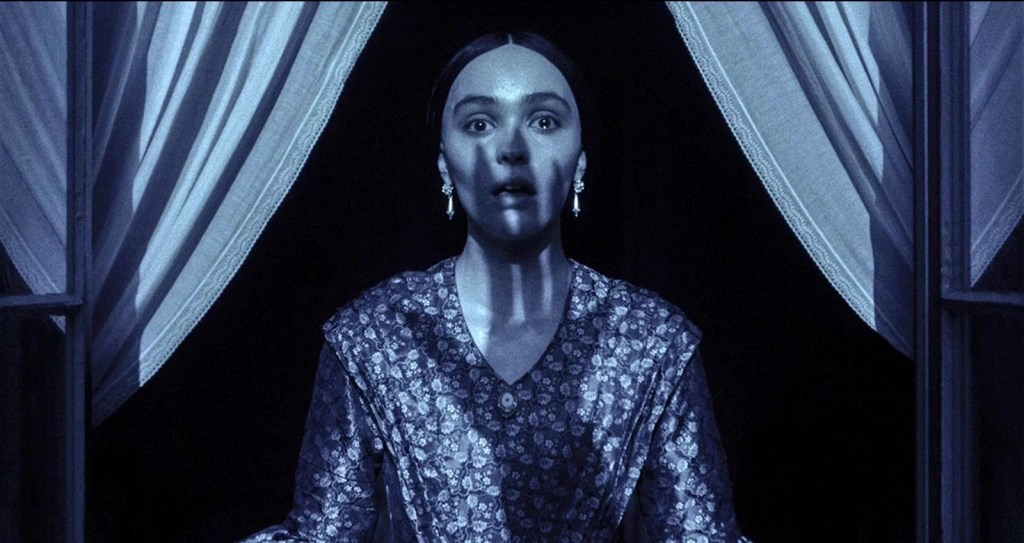
Eggers uses shadows as his main artistic tool to create absence which becomes a powerful visual element when he uses it to depict Victorian wallpaper through his claw-like silhouettes. The film Nosferatu achieves complete darkness which most contemporary movies avoid because they fear its intense power. The director spent five hours lighting candles for each individual scene. Sure.
I entered the theater with doubts about the movie. The world has seen numerous Dracula interpretations which include sexy versions and existential takes and action-packed reinterpretations.
The story achieves its best effect through genuine unpleasantness which most filmmakers fail to understand. The film presents a type of decay which resembles rot instead of showing graphic violence. The audience at the theater experienced a sudden startle when Orlok finally appeared on screen after his long shadowy introduction and his face visible for only two seconds. Two seconds. That's restraint.
The costume design by Linda Muir achieves a special effect through her work. Ellen spends most of the movie wearing white nightgowns and basic dresses which create an ethereal appearance that makes her seem like a supernatural being rather than a period character. She becomes half-ghostly before any supernatural events occur to her. The 16th-century Transylvanian noble outfit of Orlok remains the same throughout the film while showing signs of decay through his greenish gold and distressed velvet materials. The fabric shows three hundred years of decay which transforms into the present day. The costume design reveals how time passes through the film by showing how past elements decay into present-day reality.
Actually wait. The location search for the crossroads scene required Jarin Blaschke to spend three months before he discovered the perfect spot which he then lit from both sides to create tree illumination while keeping Thomas in darkness. The ninety-second sequence functions as a flawless transition point which transforms the film from a historical drama into complete nightmare territory. The carriage appears from complete darkness without any establishing shot or geographical connection. Thomas explains to Orlok that he wants to understand the strange customs which peasants practice in their daily lives.
The film maintains a continuous blue-grey moonlight atmosphere which Blaschke achieved by eliminating most color frequencies from his palette. The film presents only cyan and shadow tones while omitting all red and yellow colors. The Hardings maintain their mansion's warm colors through their brown and burgundy decorations which represent the normal world Ellen can no longer reach. The film uses color to show how characters become exiled from their world.
The way Eggers stages Ellen's possession scenes stands out to me as his most impressive direction. The camera shows Ellen in wide shots which make her appear small against the surrounding architecture while she fights against her possession. The sound effects in the scene become completely silent except for her breathing sounds. Bill Skarsgård delivers the line "I am an appetite, nothing more" with the same matter-of-fact tone he would use to discuss weather conditions. Bill Skarsgård delivers the line without any dramatic flair while showing only his hunger as a force of nature.
The plague storyline proves essential to the story because. The story typically uses this section as background information. The film spends twenty minutes showing the town's death while the protagonists fight about supernatural matters which creates the actual horror. The vampire serves as a secondary threat to the main horror which emerges from the collapsing infrastructure.
The film contains several unconvincing elements. The script fails to provide Aaron Taylor-Johnson with any meaningful doubts to question during his portrayal of the skeptical friend. Emma Corrin plays Anna as a perfectly composed society wife who exists only to contrast with Ellen. The film includes an information dump about vampire killing methods which Von Franz explains to the audience through a single long exposition. Eggers asks viewers to trust his direction even though he spent two hours teaching them his visual storytelling methods.
Willem Dafoe delivers his performance as Von Franz with enough theatricality to make the poorly written dialogue become compelling. Von Franz tells Ellen that she would have made an excellent priestess of Isis during ancient pagan times. The scene serves no purpose yet it perfectly captures the essence of the movie. The actor understands the exact nature of this cinematic experience.The ending. The story concludes with a complete tragic sacrifice rather than discovering an intelligent solution to the problem. Ellen meets Thomas' gaze as Orlok feeds from her body while she experiences both intense pleasure and deep sorrow. The windows fail to show any dramatic sunlight entry. The ordinary gray light of dawn enters the room to make Orlok disappear from view. No dust cloud. He appears before disappearing from existence.
The film presents an appearance which resembles a Caspar David Friedrich painting that has developed an infectious condition. Each picture within the film functions as a standalone image which reveals the complete story. The entire story of the film emerges from its color scheme which performs better than most films' written content.
The film creates a terrifying experience through its atmosphere rather than traditional frightening moments. The film creates a sense of dread which surpasses typical jump scares. The opening scene shows Ellen calling to darkness until she receives a response from an unknown entity. The camera shows only her face as she transitions from desire to pure terror. Her facial expression continues to haunt me. The entire movie exists within that single instant.
Remakes of films often attempt to justify their original material by creating new versions that match contemporary tastes. This doesn't. The film immerses itself in its 1838 time period to create an atmosphere where viewers can experience the heavy feeling of period clothing and the tightness of candlelit spaces and the genuine darkness of pre-electricity times. The film presents a modern take on vampire stories through its serious depiction of how desire can lead to actual destruction.
| Original title: | Nosferatu |
| Verdict: | 👍 Watch it! |
| Runtime: | 132 minutes |
| Rating: | R |
| Released: | December 25, 2024 |
| Director: | Robert Eggers |
| Cinematographer: | Jarin Blaschke |
| Costume Designer: | Linda Muir |
| Production Designer: | Craig Lathrop |
| Composer: | Robin Carolan |