
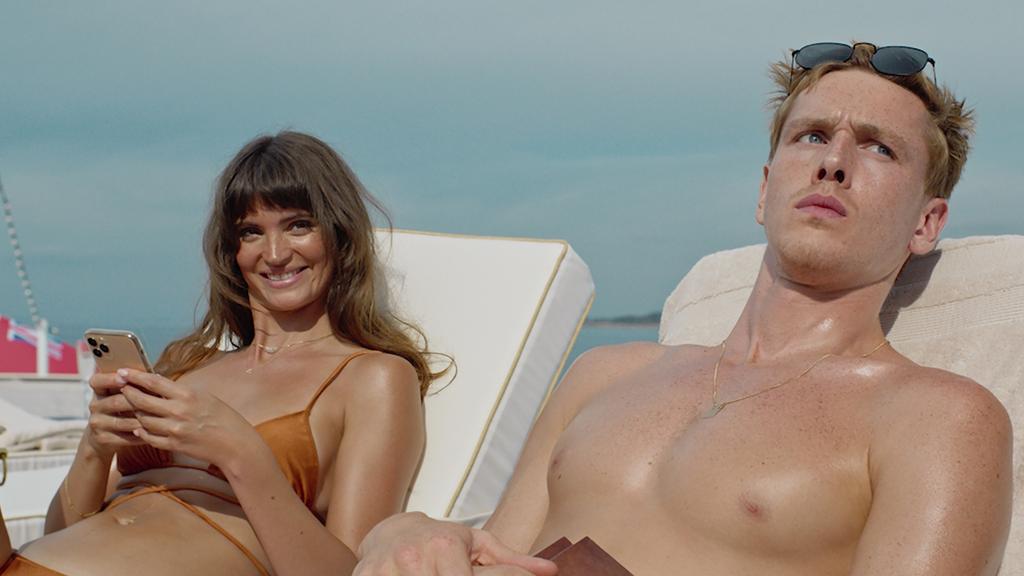
Beige is a vastly underrated color.
The camera in Östlund's film presents yacht luxury through a Pantone commercial lens which has turned rotten after its colors of cream and white and champagne gold display wealth before they get stained. We'll get there. Actually, wait. No. The fashion show displays "Everyone's equal" as its first message before we begin our journey to the water which reveals the entire extent of their lack of subtlety.
Fredrik Wenzel shoots this thing like Tintin went to hell. Clean lines. Primary colors that pop against ocean blue. Everything's so deliberately composed you want to mess it up, which I suppose is the point because boy does it get messy. The yacht sections present themselves as perfectly sealed environments through their flawless appearance with all white uniforms being perfectly pressed and every surface shining brightly. The storm arrives after this point.
That dinner scene. Jesus.
Films attempt to show class warfare through violent scenes and through dialogue and through strategic symbolic representations. Östlund forces every character to experience vomiting throughout the entire story. For what feels like twenty minutes. The camera continues to record everything that happens as champagne and caviar return to the surface and toilets start overflowing and Woody Harrelson's captain gets drunk while arguing about capitalism between his vomiting episodes. It's revolting. It works better than it should.
Sofie Krunegård uses her costumes to show how characters relate to each other in terms of power before they begin talking. The crew's whites are armor and prison simultaneously. The guests dress like money made fabric choices for them, lots of linen and designer resort wear that photographs well but means nothing. The third act shows that the cleaning lady's practical work clothes become the most vital outfit because she demonstrates fishing abilities. Power shift via wardrobe change.
The color work needs additional focus in this production. When they hit the island, suddenly earth tones dominate. Browns, greens, sand. Real colors after all that yacht artifice. The beige privilege literally washes away. Visual storytelling carries the weight of the story through its use of minimal dialogue which creates his most effective work.
The film commits so hard to its eat-the-rich premise it almost wraps back around to subtle. Almost. Harris Dickinson and Charlbi Dean play influencer models whose relationship exists primarily for Instagram engagement. The restaurant argument between them about payment expenses continues until you realize that money serves no actual purpose in this situation. Performance is.
A pretzel stand appears unpredictably on the island which continues to bother me. Just sitting there. The film doesn't explain it, doesn't need to. Later you realize they were never actually that isolated. The whole survival scenario, another performance. The yacht operated according to its own established set of rules. Östlund refuses to let anyone off clean.
The triangle of sadness itself barely matters. Some plastic surgery thing about the spot between your eyebrows. The actual triangle exists as the three-act structure which redistributes control between locations throughout the story. Fashion world, yacht, island. Each with different hierarchies, same human ugliness underneath.
Pacing drags in the island section. After the manic yacht chaos, everything slows to a crawl. The situation appears to be deliberate yet it requires enduring patience. The story ends abruptly without any resolution. The environment of Not quite lands creates an unusual atmosphere which seems meaningful to me.
| Original title: | Triangle of Sadness |
| Verdict: | 👍 Watch it! |
| Runtime: | 147 minutes |
| Rating: | R |
| Released: | October 7, 2022 |
| Director: | Ruben Östlund |
| Cinematographer: | Fredrik Wenzel |
| Costume Design: | Sofie Krunegård |