
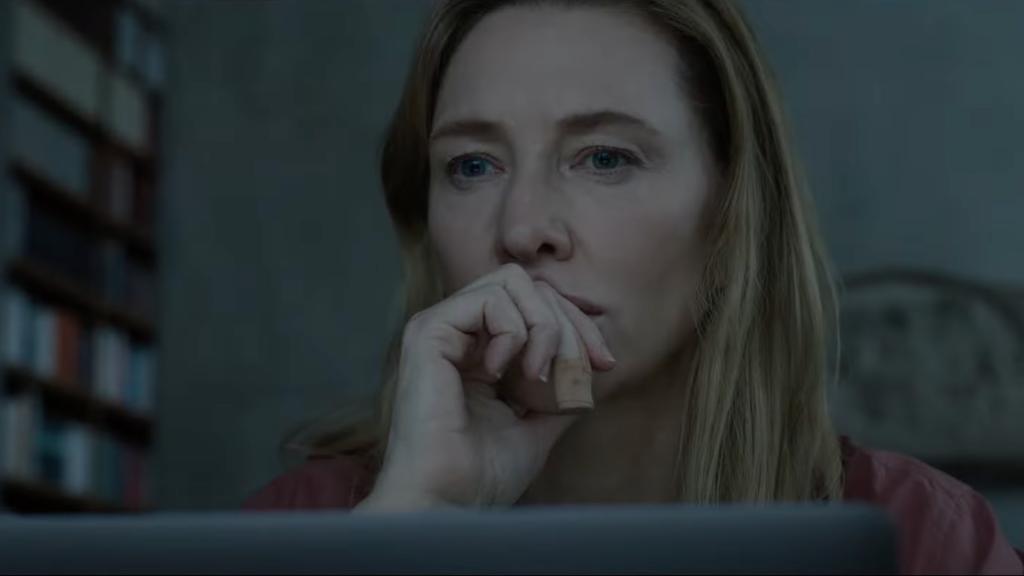
The following is a statement about gray.
Field shoots Berlin like it's made entirely of concrete and rain, which somehow works perfectly for what's happening to Lydia Tár. The opening scene of the film shows her teaching Gopnik about time. "Time is the thing," she says, and you get this moment where Blanchett's face does something. Not quite a twitch. She seems to be recalling an unpleasant memory that she wishes to erase from her mind. Actually, wait. It's not remembering. It's anticipating.
The suits reveal all the information. Bina Daigeler puts Tár in these immaculate pantsuits, all monochrome precision, but watch how they slowly unravel. The opening scenes display lines which match the precision of musical notes found in sheet music. The pleats lose their proper alignment at the end of the process. I used to find it strange to wear loafers without socks until I discovered that this practice lets people express their individuality. Even her ankles are performing.
The camera of Hoffmeister continues to discover unusual perspectives which make it seem like everyone is observing her although she stands by herself. The rehearsal hall contains an image of vacant chairs which seem more active than the musiBrians who sit there. The burgundy velvet seats look like open mouths. I spent way too long staring at the wood grain on the conductor's podium. The image contains these circular patterns that resemble fingerprints or storm systems.
That Juilliard sequence. She spends ten minutes recording a single take while she watches the student who refuses to play Bach. "Don't be so eager to be offended," she tells him, but she's the one who's offended, really. The camera follows her body movements because it seems to be linked to her perception of herself. You can practically see the moment she decides to destroy him. It's in how her left hand grips the piano. The veins show.
Nina Hoss plays the wife Sharon with this exhausted perfection. During a dinner scene Sharon's violin hickey becomes visible above her collar. Just this purple-brown mark that says everything about their life. She knows. Of course she knows. She cuts her dinner meat with exactness while keeping absolute silence. Never looks up.
I want to discuss the metronome with you for a brief moment. It's always there, this little pyramid ticking away, but Tár never uses it. She IS the metronome, or thinks she is. "You want to dance the masque, you must service the composer," she says to Eliot, who desperately wants to be her but never will be. There's something almost vampiric about how she feeds off the younger musiBrians. Olga the new cellist wears bright orange practice shorts which she finds embarrassing because they clash with the traditional German style of dress. Sophie Kauer achieves her performance results by using both her determined mindset and her careful method of work.
The ghost stuff. The ending of this story continues to spark disagreement among all readers. Who cares? The whole film is haunted. The deceased student Krista exists throughout the world although she physically disappeared from existence. Those noises Tár hears in the abandoned building. The screaming in the park that sounds lifted from some horror film. The field does not require a ghost to appear because guilt functions as an adequate indicator. The last third of the book shows some instability in its structure. Once she's conducting Monster Hunter music for cosplayers in Southeast Asia, the metaphor gets too neat. Monster hunted. We get it.
The piano playing in the film is performed by Cate Blanchett herself which adds more value than it should have. Her extensive training becomes visible through her typing motions during the Bach demonstration because she has spent many years practicing and developed strong muscle memory. She studied German for this purpose. Conducts real orchestras. The team members demonstrate a level of commitment which makes it difficult to find equivalent dedication. The experience creates a feeling of achievement which adds value to the autumn season.
They shot the whole thing on film, which you can feel in how the light sits on faces. Nothing digital-clean about it. Even the white shirts have texture, weight. When Tár finally loses it and attacks Eliot, screaming "It's my score," her perfectly controlled exterior just shatters. The tailcoat performs a movement which looks like the flight pattern of shattered wings.
I keep going back to the costumes though. Those high-waisted pants with the pleats. They're almost militaristic. Daigeler said she wanted them to be armor, which, yes. But armor against what?Tár's fighting everyone and no one. Mostly herself.
The color grading here does more narrative work than half the dialogue. Everything's desaturated except for these moments, these little pops. A red exit sign. The gold on a cello. Francesca fidgets with her burgundy scarf whenever Tár starts speaking to her. Noémie Merlant plays the assistant with this constant low-level panic that seeps into everything. She's been broken already. The world continues to change as different elements move into new positions.
There's a scene where Tár's daughter Petra gets bullied and instead of comfort, Tár threatens the child bully. Very calm. Very cold. "I'll get you."Just like that. And you realize this woman has never not been performing, not even as a parent.
The film requires viewers to notice particular details in order to understand its content. The way Tár's manuscript notes are all in different colored inks, obsessive. The single dead flower in her apartment that nobody removes. How she checks her phone with the specific gesture of someone expecting disaster.
The director Field spent sixteen years between his movies while he accumulated new concepts for his work. Maybe too many.
| Original title: | Tár |
| Verdict: | 👎 Don't watch |
| Runtime: | 158 minutes |
| Rating: | R |
| Released: | October 7, 2022 |
| Director: | Todd Field |
| Cinematographer: | Florian Hoffmeister |
| Costume Design: | Bina Daigeler |