
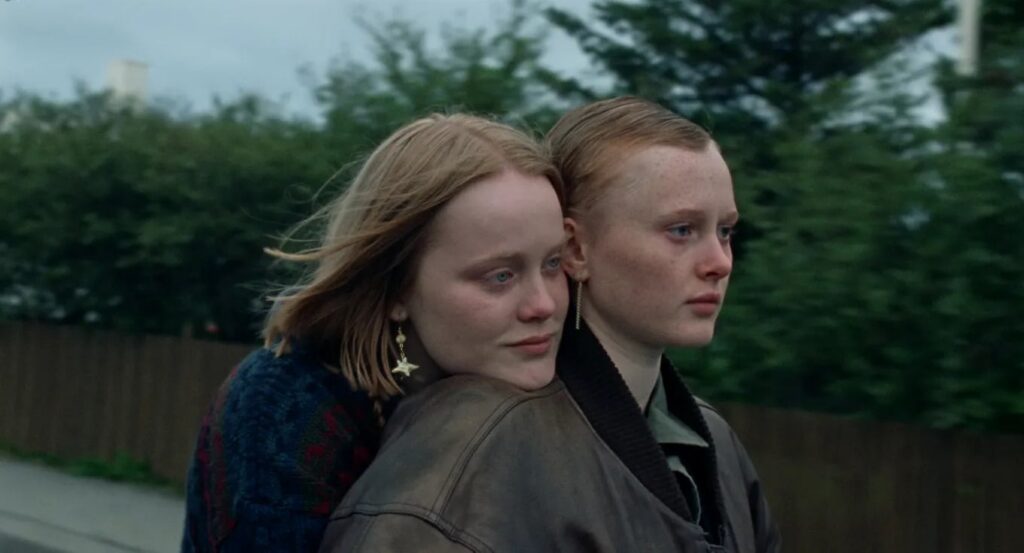
While loneliness is a shared experience, it's form can vary wildly between participants. Everyone around you mourns the wrong version of the person you loved. I have felt something adjacent to it, though in far less dramatic circumstances: watching an ex's friends toast to memories I was never invited into. Rúnar Rúnarsson's When the Light Breaks lives inside that feeling for 82 minutes, and it is quietly devastating.
The premise is deceptively simple. Una, a performance art student in Reykjavik, loses her secret lover Diddi in a tunnel explosion. She cannot grieve openly because no one knows they were together. His official girlfriend, Klara, receives the embraces, the soft words, the communal sympathy. Una gets to watch.
This could easily tip into melodrama. It does not. Rúnarsson compresses everything into a single day, from one Icelandic sunset to the next, and the restraint is the point. The film understands something essential about grief: that it is often not the grand collapse but the accumulation of small, unbearable moments. A stranger touching Klara's shoulder. Someone mentioning that Diddi and Klara were "the perfect couple." Una's face, saying nothing.
Elín Hall's performance is extraordinary in its stillness. She plays Una with a slicked-back crop and an androgynous toughness that feels less like armor and more like habit, the way some of us learn early to take up less space. Her grief surfaces in fragments: a too-long stare, a hand that almost reaches out, the way she positions herself at the edge of every frame. Hall never asks for your sympathy directly, which makes it harder to withhold.
There is one scene I keep returning to. Actually, no, there are two. The first: Una in a bathroom with Klara, who mentions that Diddi once reassured her by saying Una was a lesbian. Una corrects her, quietly. "My last love was a guy." It is not a confession, exactly. More like a door left slightly ajar. The second: Una demonstrating her art piece, teaching someone to "fly" using the architecture of Hallgrímskirkja. The camerawork, courtesy of Sophia Olsson, makes it briefly magical. A small, borrowed transcendence.
The film is shot with an attentiveness to isolation that borders on geometric. Una framed alone against the glass shards of Reykjavik's Harpa concert hall. Una on a bus, separated from costumed graduation revellers by what might as well be continents. Olsson and Rúnarsson are not subtle about this, but they earn it. There is a difference between underlining and insisting.
I will admit that the 82-minute runtime left me wanting more. Or perhaps not more, but longer. The relationship between Una and Klara, which blooms unexpectedly in the final act, deserved room to breathe. Their tentative closeness, two women orbiting the same ghost, is where the film finds its most surprising tenderness.
Still. The closing shot is perfect. A sunset, like the one that opened the film, but now carrying a different weight. Jóhann Jóhannsson's choral score lingers. Nothing is resolved. Una's wound is still open. The light breaks, and breaks, and does not stop breaking.
Some films try to teach you how to feel about them. This one trusts you to sit with what it offers, even when what it offers is uncomfortable. I appreciated that. I also found myself, afterward, walking home along the canal and not quite ready to think about anything else.
| Original title: | When the Light Breaks |
| Verdict: | 👍 Watch it! |
| Writer: | Rúnar Rúnarsson |
| Lead Performances: | Elín Hall (Una), Katla Njálsdóttir (Klara), Baldur Einarsson (Diddi) |