
An upside down statues of liberty is memorable.
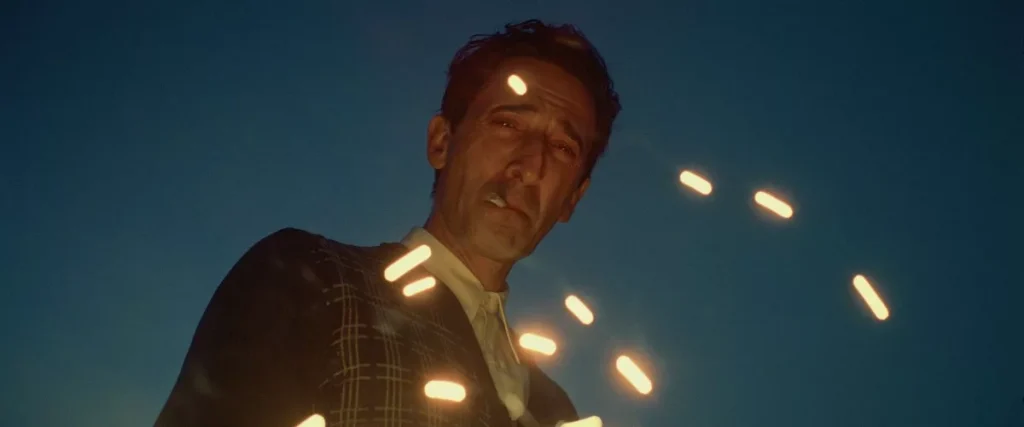
The film by Corbet begins with László Tóth stepping into Ellis Island while he views the inverted Lady through his eyes. The opening visual effect shows potential to be a gimmick but the following three and a half hours maintain their focus on disorienting the audience. The immigrant architect story exists as a well-known historical phenomenon. Neither is the tortured artist narrative. The camera work of Lol Crawley transforms concrete into flesh through his use of institutional gray tones which reveal sick yellow and bruised purple colors. The film stands out to me because of this unique visual approach.
Brody's face does most of the heavy lifting here, all hollowed angles that catch shadow like the brutalist buildings he designs. When Harrison Lee Van Buren shouts "You've turned it all inside-out!"about his violated library, the camera holds on Brody, not moving, just absorbing. The silent moments in the film deliver more impact than the loud Daniel Blumberg music which attempts to create a biblical atmosphere.
Actually, wait. The library scene. I need to discuss the sliding panels with you for a brief moment. The design looks attractive but it fails to serve a man who needs to read his books. The entire situation appears to be deliberately planned. László creates architectural spaces which function as conceptual monuments instead of practical areas according to brutalist design principles.
Judy Becker designed the production to maintain the feeling that these areas exist to create feelings of separation. The costume design follows the same pattern as the actors because Erzsébet becomes invisible in the backgrounds through her wheelchair and brown and olive clothing but Harrison stands out in every scene through his white and black attire.
Guy Pearce delivers a performance of Harrison which shows the character of old money who learned to smile only after yesterday. The character shows László that their conversations offer him "intellectually stimulating" content but the long period of silence before he says "stimulating" creates an uncomfortable atmosphere. Pearce gets that this character doesn't understand art so much as wants to possess the artist. The entire relationship between them shows signs of suffocation before their Italian journey reaches its destructive point. Harrison keeps helping but his actions create more problems in the situation.
The film loses itself sometimes. The intermission serves a purpose because Corbet struggles to connect the two parts of his narrative. Pre-intermission László struggles and creates; post-intermission he destroys and gets destroyed. The musical transition creates a more powerful effect than what the composer originally planned to happen. And that epilogue in 1980, with Zsófia explaining the concentration camp echoes in the architecture?
The film didn't need to spell that out. We got it. The areas existed to deal with traumatic experiences.
Felicity Jones gets stuck playing suffering wife, though she brings unexpected edges to it. The osteoporosis from war famine, she wears it like accusation.
The program achieves success through its commitment to building an environment which makes America actively hostile. The fight against prejudice emerged through the establishment of furniture stores named Miller and Sons which lacked both Miller and sons as owners. Through that nervous laugh when Harrison says "I would like to draw something and then present it to you" and Van Buren responds "You'd like to win the commission."The power system becomes unworkable when no one delivers any messages. Mostly.
VistaVision makes everything feel preserved in amber, which fits the 1940s setting but also makes the whole thing feel embalmed. That's not entirely bad. There's something appropriate about watching this particular American dream through a dead format.
"No matter what the others try and sell you, it is the destination, not the journey."The film ends on this inversion of conventional wisdom and honestly, after 215 minutes, I'm not sure Corbet earned the profundity he's reaching for. But the reaching itself, the sheer bloody-minded ambition of making a three-and-a-half hour brutalist epic about brutalism? The situation on its own creates enough reason for this action.
| Original title: | The Brutalist |
| Verdict: | 👍 Watch it! |
| Runtime: | 215 minutes |
| Released: | December 20, 2024 |
| Director: | Brady Corbet |
| Cinematographer: | Lol Crawley |
| Costume Design: | Kate Forbes |