
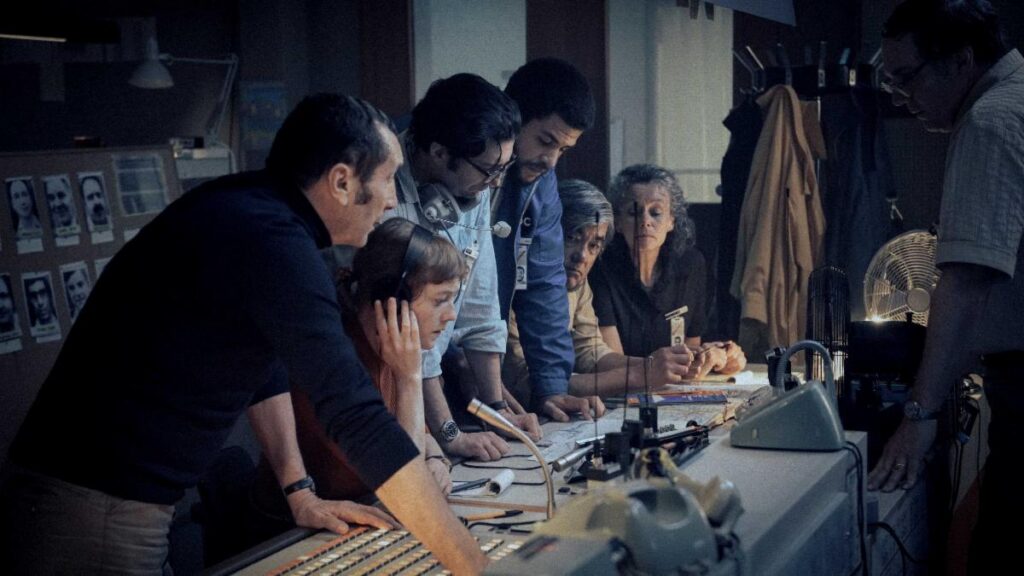
Yellow. The first thing that catches you about September 5 is how aggressively yellow everything looks. Not warm, not golden. Yellow.
The control room where these ABC Sports journalists scramble to cover the Munich hostage crisis feels soaked in nicotine stains and fluorescent haze, which works better than it should. Actually makes you queasy. The entire film by Tim Fehlbaum presents a dying lightbulb atmosphere which effectively tells more of the story than all the spoken words combined.
Here's the thing about this film. It wants to be a journalism thriller about the birth of live crisis coverage. Fine. But then it refuses to actually interrogate what that means, and that refusal sits weird throughout the entire 95 minutes.
John Magaro plays Geoffrey Mason, the control room head thrust into managing coverage of Black September's attack on Israeli athletes. Magaro's good. Really good, actually. The character watches video footage of the masked terrorist who appears on the balcony before he declares "That's our opener" while his eyes flash with a moment of mental breakdown before he executes the order. The film required additional scenes of that nature. The team needs to understand their content creation process instead of wasting time on deciding when to share their content.
I need to discuss Leonie Benesch with you right now. She takes on the role of Marianne who serves as a German translator until the entire situation reaches its breaking point. The character delivers a heartbreaking statement when she declares "Innocent people died in Germany for the second time. We failed. Germany failed."The way Benesch delivers it, you feel the entire weight of post-war German identity crushing down. But then the film just… moves on. Doesn't know what to do with that weight.
Peter Sarsgaard shows up as Roone Arledge, the ABC Sports boss, and delivers what should be the film's thesis: "It's not political, it's about the emotions."Except that's exactly backward. Everything here is political. The broadcast decision together with the presentation style and the ski mask image which turned into terrorism's defining symbol. The movie understands this situation but continues to act as if it remains unaware of it.
Look, the claustrophobia works. The handheld cameras inside the control room create actual tension because they move around the space. The period detail focuses correctly on the technical constraints that exist. The team takes actual photos of graphics which will later appear on screens. Film canisters racing back and forth. Everything analog and immediate.
The moral dilemmas appear too perfect in their state of purity. These journalists agonize about giving terrorists a platform, yet the film never shows us the Palestinians as anything but shadows and ski masks. Their demands get mentioned once, briefly. Two hundred Palestinian prisoners. Then nothing.
Actually, that's unfair. The film does excellent work showing how these sports journalists stumbled into creating modern news coverage. The way they improvise solutions, sneak cameras places, coordinate with near-zero infrastructure. The situation appears to be completely out of control. Visceral, even.
The costumes reveal how these characters view themselves against their current transformation. Marvin Bader, played by Ben Chaplin with barely contained fury, wears this rumpled shirt that gets progressively more disheveled as the day destroys him. His family survived the Holocaust. The current German Jewish deaths make Chaplin show how historical events consume him completely through his silent depiction.
| Original title: | 5-Sep |
| Verdict: | 👍 Watch it! |
| Runtime: | 95 minutes |
| Rating: | M |
| Released: | December 13, 2024 |
| Director: | Tim Fehlbaum |
| Cinematographer: | Markus Förderer |
| Costume Designer: | Julian R. Wagner |